Back to projects

Internal Platform for Employee Development

An employee development platform used by 3,000+ people to create and manage Personal Development Plans, track progress and collaborate with mentors.

EnterpriseWeb appInternal toolHRTech
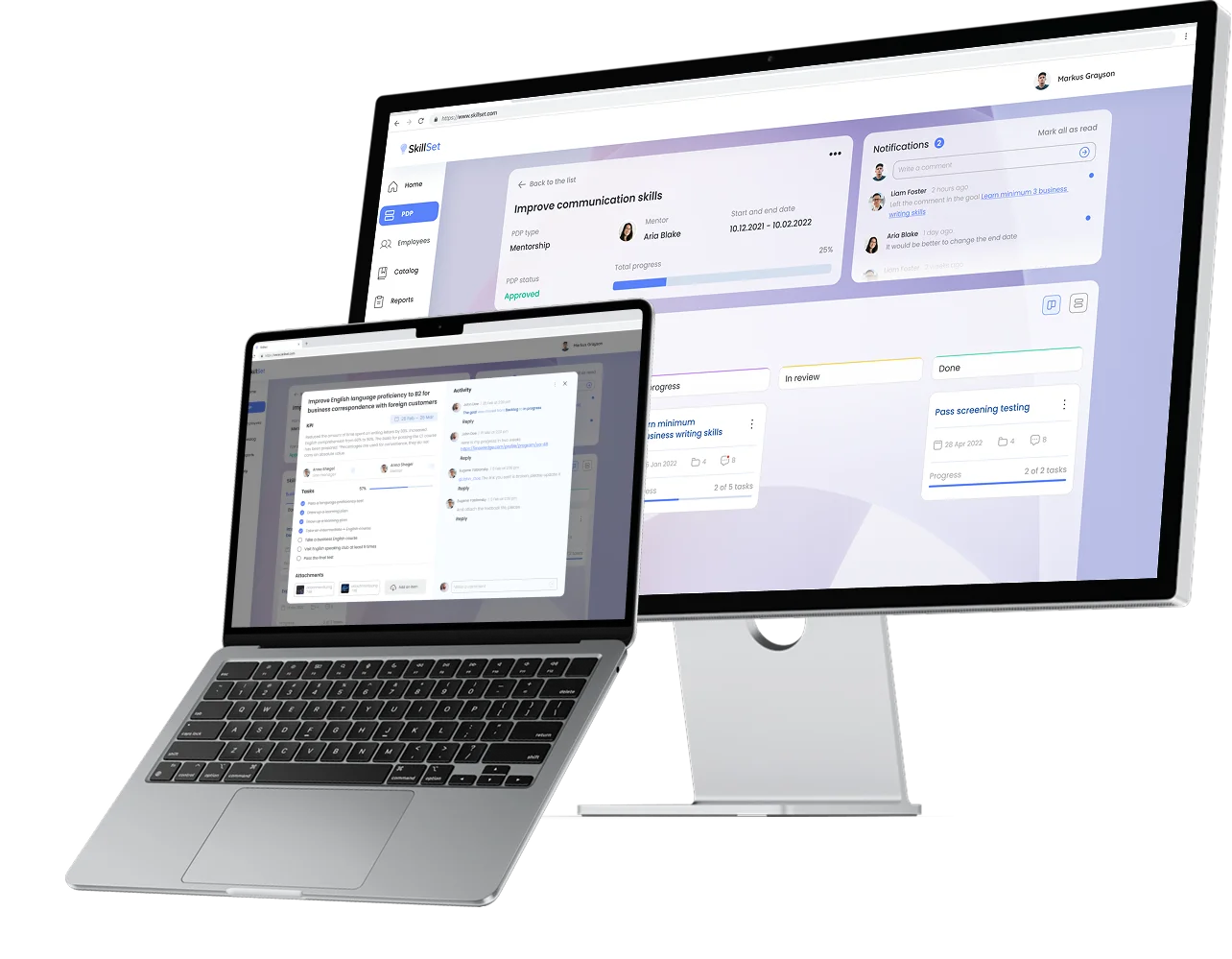
PDP platform shown on desktop and laptop
RoleProduct Designer

PDP experience, employee workflows and mentor collaboration.

ScopeEnd-to-end product design

Research, UX/UI, prototyping and validation.

TeamCross-functional enterprise product team

Product Owner, 2 Business Analysts, Systems Analyst, 3 Developers.

Challenge

The PDP experience was difficult to use independently: employees relied on external instructions to understand the process, the mentor–mentee approval flow was unclear, and an unintuitive interface made key actions and next steps hard to understand.

Business Goal

Create a clear, self-service PDP workflow for 3,000+ employees that supports goal setting, progress tracking, and mentor approval while reducing reliance on instructions and manual support.

Results

— New workflow simplified goal planning and improved collaboration between employees and mentors
— Reduced reliance on external documentation and manual support
20% fewer support tickets after launch

Final design decision

Progress management

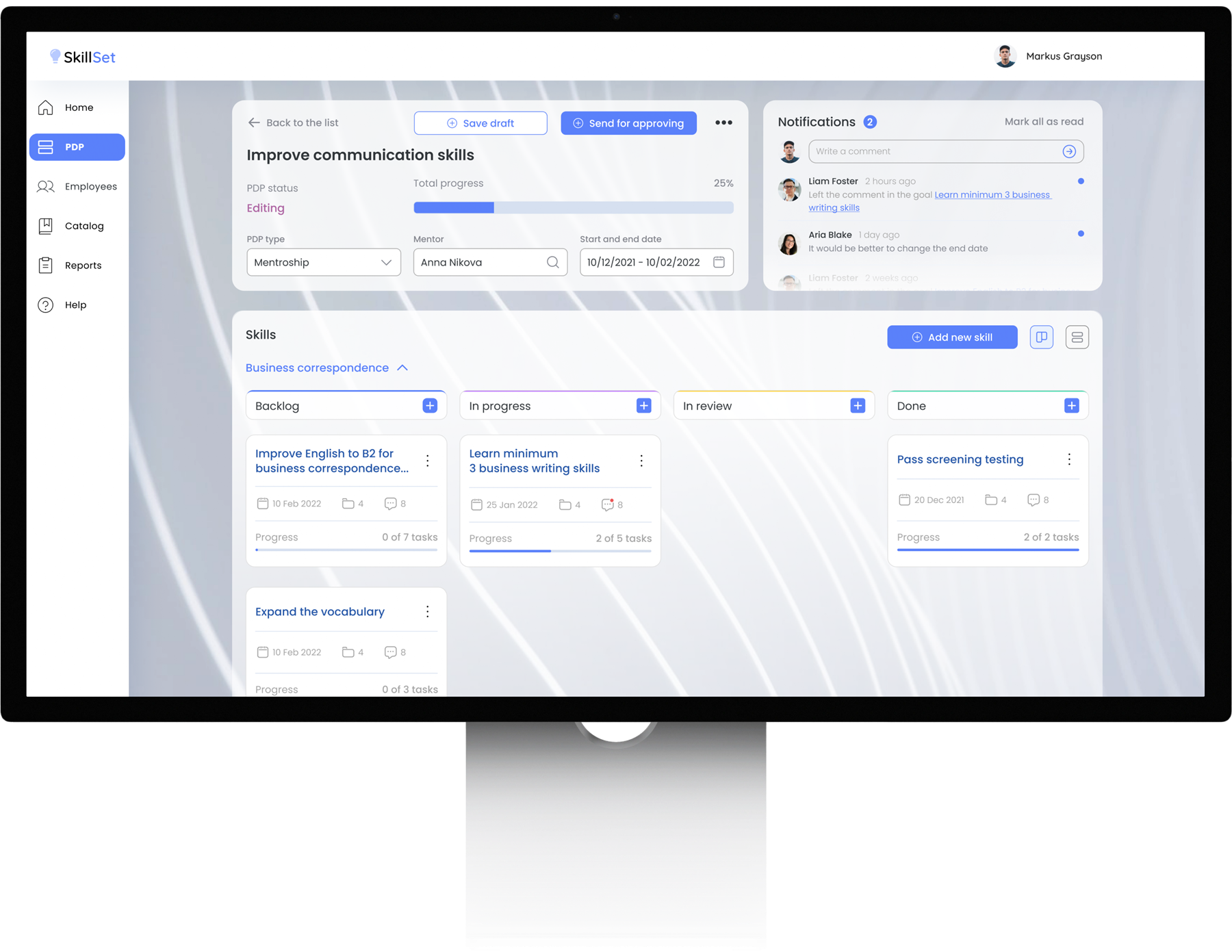
Editing the PDP

Controlled editing

The PDP is locked for other users during editing to prevent conflicts in the approval process.

Flexible PDP settings

Employees can update the PDP type, mentor, and timeline while editing.

PDP editing screen displayed on a desktop monitor
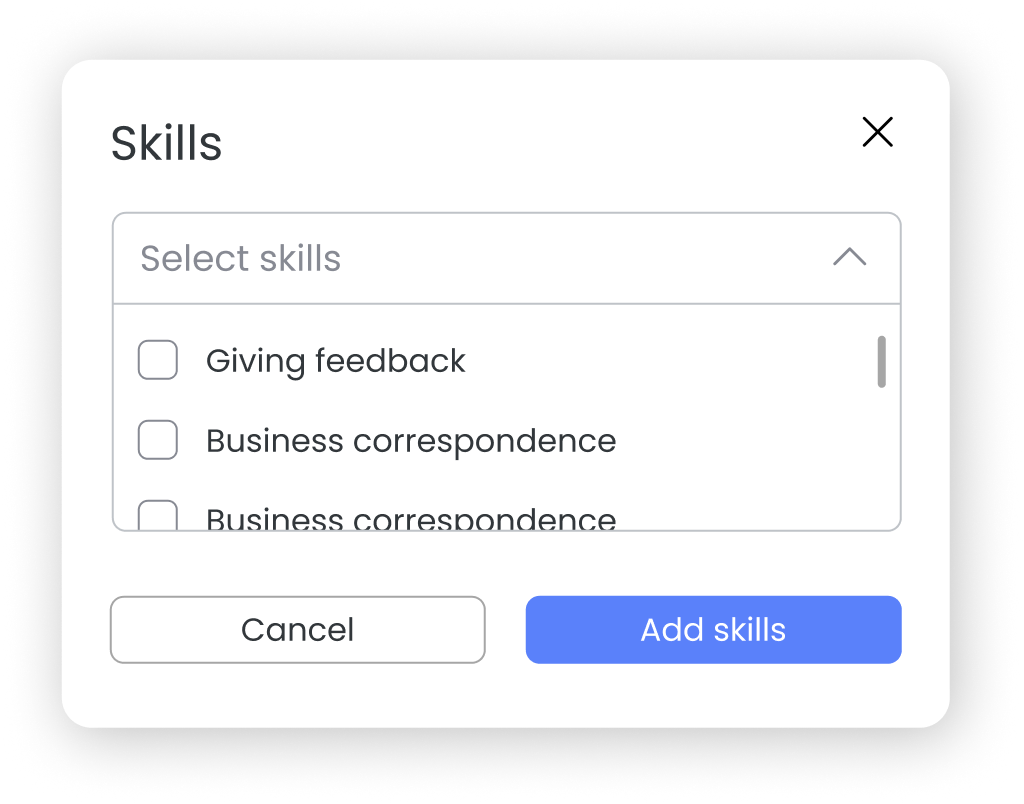
Skills selection modal

Flexible goal structure

Employees can add skills and create goals within each skill directly from the board.

Task details & updates

Key learnings

Designing for independence means making the process explain itself

Clear roles reduce workflow friction

Making employee and mentor responsibilities explicit helped simplify the review and approval process.

Self-service depends on visibility of next steps

Users need to understand not only what they can do, but what happens next and who is responsible.

Internal tools benefit from product-level consistency

Reusable interaction patterns and clearer hierarchy made the platform easier to navigate without relying on external instructions.